For years, I lived with stomach pain and constipation. I remember going to work in so much pain I could barely stand. And as a pharmacist, I was on my feet for 11 hours straight. There was no sitting down and waiting for it to pass. Only powering through. Which is also part of what got me into this mess, but I'll save that for another post…
When I was diagnosed with Graves' disease, all the focus was on my thyroid numbers and antibodies. Later, when my eyes started changing with Thyroid Eye Disease, I was still being told my labs were "in range."
But my gut… It got even worse after my Graves' diagnosis. I had no safe foods left. I was eating the simplest diet you can imagine: homemade organic soups with bone broth, chicken and "safe" low-residue veggies like carrots and zucchini. Something had to give.
The bloating and gas were insane. It was loud. You could actually hear my stomach gurgling. The gas didn't want to release, so it just sat there and left me keeling over in painful bloat. I was in constant pain.
I was doing everything "right." I was taking lots of expensive probiotics. I was eating fermented foods, sauerkraut and Coconut Cult yogurt, and I couldn't figure out why I was so bloated and in so much pain.
I felt scared, dismissed and nothing like myself. And it took me way too long to learn something I now tell almost every woman I work with: your thyroid doesn't live on an island. A huge part of the story starts in your gut.
If you're bloated no matter what you eat, exhausted even though you sleep, losing hair, or watching your ferritin (and all other nutrients) stay low while you eat all the right things and take allll da vitamins, this post is for you. Let's talk about how your gut and thyroid are connected, the signs your gut may be part of your picture, and why testing beats guessing every single time.
How your gut and thyroid are connected
1. Autoimmunity often starts in the gut. About 70% of your immune system lives in and around your gut. Dr. Alessio Fasano describes a triad of autoimmunity: a genetic predisposition, increased gut permeability (often called "leaky gut") and an environmental trigger. You can't change your genes. But your gut is a piece of the puzzle you can actually work on.
2. Some thyroid hormone activation happens in the gut. Your thyroid mostly makes T4, the storage form. Your body has to convert it into T3, the active form your cells use, and a healthy gut and its bacteria play a role in that process. When your gut is off, your labs or your meds may not match how you actually feel.
3. Your gut decides what you absorb. Iron, ferritin, B12, zinc and selenium all matter for thyroid health. Low stomach acid, inflammation or an imbalanced microbiome can keep you low even when your diet looks perfect on paper.
4. Your gut helps process estrogen. A group of gut bacteria called the estrobolome helps your body handle estrogen. When it's out of balance, hormone swings, PMS and perimenopause symptoms can feel louder, and those hormone shifts can affect how your thyroid feels too.
Signs your gut may be part of your thyroid picture
You don't need to have every one of these. Even two or three are worth paying attention to:
Bloating, gas, burping, constipation or loose stools
Reflux, or feeling heavy and tired after meals
Reacting to more and more foods
Low ferritin, B12 or vitamin D even though you eat well or supplement
Fatigue and brain fog that don't match your "normal" labs
Anxiety, skin flares or hair loss
Hormone swings, PMS or perimenopause symptoms that feel worse every year
If you read that list and thought "that's me," you're not crazy, and you're not alone. These are some of the most common things I hear from women with Graves', Thyroid Eye Disease and Hashimoto's.
Test, don't guess
A lot of people don't know this, but probiotics don't fix everything. They can actually be a risky game. Whoever told you all you need to do is take more good bacteria to push out the bad bacteria? They fkn lied. lol.
If you have overgrowths, dysbiosis, SIBO (the list goes on), you need to address the bugs and repair the gut lining first. Otherwise you're just feeding the flame. And it can be a whole variety of bugs: bacteria, parasites or yeast like candida. It's a guessing game unless you actually test.
The crazyyyy thing is that conventional stool tests do NOT check your microbiome. They only look for the biggest, baddest bugs, and they aren't very sensitive tests, so even those don't always show up.
I learned this the hard way. When I was struggling with my gut, I did a conventional stool test, and the only thing it found was Blastocystis hominis. I happened to test when I was in Mexico, I don't even know if a standard lab in the US would routinely check for that. Then I ran a functional stool test when I got back to the states, and a ton of other things came up:
H. pylori, with virulence factors
Bacterial overgrowths, including Enterococcus, Pseudomonas and Streptococcus
Blastocystis hominis (still there even after a round of antibiotics hmmm)
Candida
Leaky gut markers
My gut was a mess. Once I addressed it with an extensive gut protocol, my eyes started getting better within weeks. It was magical. These photos are six months apart, February to August 2024. If I didn't have photo evidence, I don't think anyone would believe me.
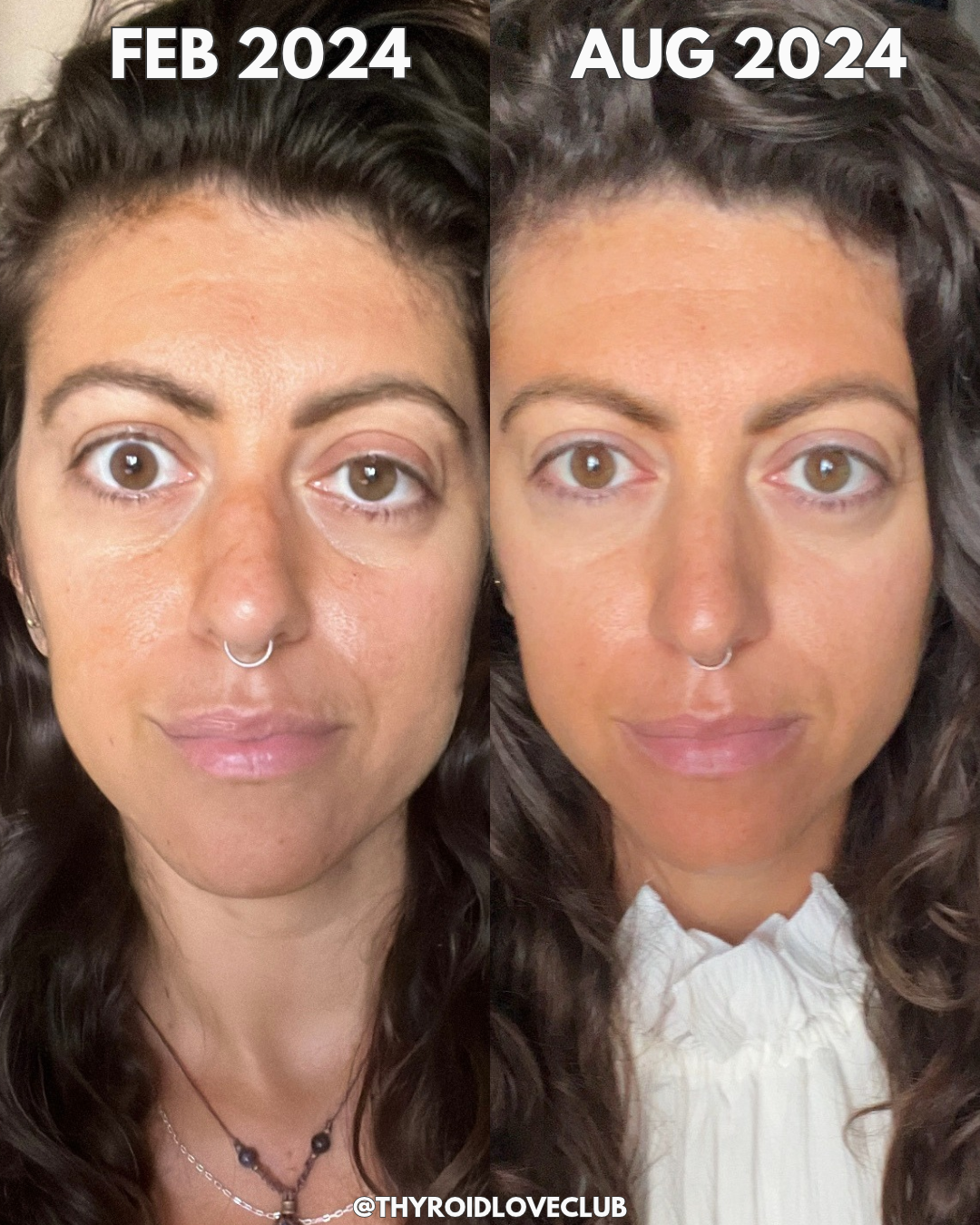
February 2024 vs. August 2024, after addressing my gut
This was my experience, and everyone's body is different. Your gut protocol should always be based on your own test results and done with a practitioner.
What a functional stool test can show:
Overgrowths of bacteria, yeast or parasites
Low levels of beneficial bacteria
Markers of inflammation and gut barrier stress
How well you're digesting and absorbing your food
My favorite panels include Gut Zoomer, GI Advanced and GI-MAP. Some of them even show which herbs the organisms in your gut are sensitive to, so your protocol is targeted to you instead of a one-size-fits-all blend. Depending on your story, hormone testing like DUTCH or Hormone Zoomer can fill in the rest of the picture.
And this always works alongside your conventional care. I blend it all: your doctor and your meds, plus nutrition, supplements, herbs and lifestyle.
Where to start
A few things you can do today:
Track your gut for two weeks. Note bloating, bowel movements, energy and which meals leave you feeling heavy.
Check your nutrient labs. Ask for ferritin, B12, vitamin D, zinc and selenium if you haven't had them recently.
Eat for steady energy. Protein at every meal, plenty of colorful plants and fiber, and less of the ultra-processed stuff.
Hold off on the random probiotic. Test first so you know what your gut actually needs.
When you're ready to go deeper:
Learn more about my approach on my Gut Health page.
Understand your own stool test with The Gut Love Guide.
Work with me 1:1 on testing and a personalized gut and thyroid plan. Apply here.
Your gut might be the missing piece. We're so done with hot girl tummies. We just wanna be hot girls, full stop. She's still in there, and we can go find her together.
xo, Elena
Elena Genik, PharmD, NBC-HWC is a pharmacist and functional health practitioner who lived Graves' disease and Thyroid Eye Disease and is now in remission. This content is for educational purposes only and is not medical advice.